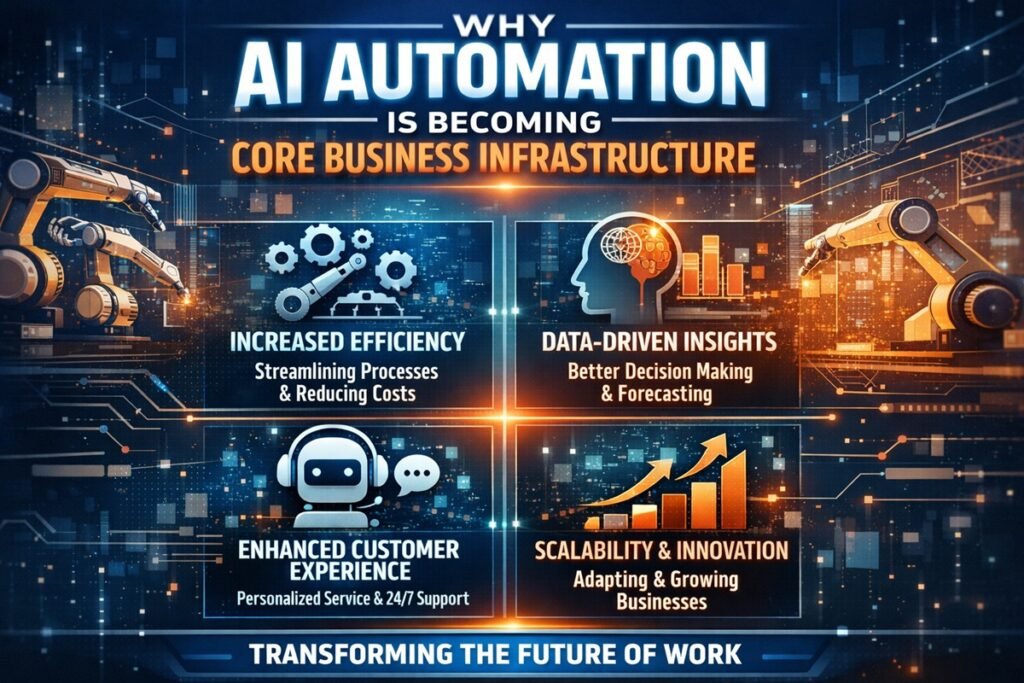

AI automation is no longer a futuristic concept or an optional upgrade for tech-savvy organizations. In 2026, it has become a core layer of business infrastructure, much like cloud computing and data analytics were in the previous decade. Businesses across industries are leveraging intelligent systems to streamline operations, reduce costs, and improve decision-making at scale.
The convergence of artificial intelligence, machine learning, and automation platforms is enabling organizations to move beyond basic task automation into intelligent workflow orchestration. This shift is redefining how businesses operate, compete, and grow in a digital-first economy.
The Evolution from Automation to Intelligent Systems
Traditional automation focused on repetitive, rule-based processes. While effective, it lacked adaptability and intelligence. AI-driven automation introduces cognitive capabilities such as natural language processing, predictive analytics, and decision-making logic.
This evolution allows systems to not only execute tasks but also learn from data, adapt to changing conditions, and optimize processes in real time. Businesses are now transitioning from static automation setups to dynamic ecosystems powered by AI.
Workflow Automation Is Driving Operational Efficiency
One of the most significant transformations in 2026 is the widespread adoption of workflow automation. Organizations are using AI-powered workflows to connect departments, eliminate bottlenecks, and ensure seamless task execution across systems.
Workflow automation enables businesses to automate complex processes such as approvals, data transfers, reporting, and customer interactions. Instead of relying on manual coordination, companies can deploy intelligent workflows that trigger actions based on real-time inputs.
This not only improves efficiency but also reduces human error and ensures consistency across operations. As businesses scale, workflow automation becomes essential for maintaining performance without increasing operational overhead.
The Role of Marketing Automation Tools in Growth
Marketing has undergone a massive transformation with the integration of AI automation. Modern marketing automation tools are no longer limited to email campaigns or basic segmentation. They now leverage AI to analyze user behavior, predict intent, and personalize content at scale.
Businesses are using these tools to create hyper-targeted campaigns that adapt in real time. From automated lead nurturing to AI-driven content recommendations, marketing teams can achieve higher engagement and conversion rates with less manual effort.
In 2026, marketing automation tools are deeply integrated with CRM systems, analytics platforms, and customer data platforms, creating a unified ecosystem that drives data-informed decision-making.
Workflow Management Software as a Strategic Asset
Workflow management software has evolved into a strategic component of enterprise infrastructure. These platforms provide visibility, control, and optimization capabilities for complex business processes.
With AI integration, workflow management software can identify inefficiencies, recommend improvements, and even automate decision-making processes. This enables organizations to continuously refine their operations without constant human intervention.
Companies are increasingly relying on these systems to manage cross-functional workflows, ensuring alignment between teams and reducing delays caused by manual coordination.
Sales Automation Is Redefining Revenue Operations
Sales teams are also experiencing a major shift with the adoption of AI-driven sales automation. From lead scoring to pipeline management, automation tools are enabling sales professionals to focus on high-value activities rather than administrative tasks.
AI-powered sales automation systems can analyze customer data, predict buying behavior, and recommend next-best actions. This allows sales teams to engage prospects more effectively and close deals faster.
In 2026, sales automation is not just about efficiency; it is about intelligence. Businesses are leveraging these tools to create data-driven sales strategies that maximize revenue and improve customer relationships.
The Rise of Droven.io AI Automation Tools
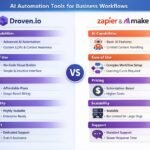
Among the emerging platforms, droven io ai automation tools are gaining attention for their ability to combine workflow automation, AI agents, and no-code capabilities into a single ecosystem. These tools are designed to simplify the automation process while providing advanced functionality.
Droven.io enables businesses to build intelligent workflows without extensive technical expertise. By leveraging AI agents, organizations can automate complex tasks such as data processing, decision-making, and multi-step operations.
The platform’s flexibility allows it to integrate with existing systems, making it a valuable addition to modern tech stacks. As businesses look for scalable and efficient solutions, tools like Droven.io are becoming essential components of AI-driven infrastructure.
Why AI Automation Is Now Core Infrastructure
There are several reasons why AI automation has become a foundational element of business operations in 2026:
- Scalability: Businesses can handle increased workloads without proportional increases in resources.
- Efficiency: Automation reduces manual effort and accelerates processes.
- Accuracy: AI systems minimize errors and improve data quality.
- Decision Intelligence: Organizations can make faster and more informed decisions.
- Cost Reduction: Operational costs decrease as automation replaces repetitive tasks.
These benefits make AI automation not just a competitive advantage but a necessity for businesses aiming to remain relevant in a rapidly evolving market.
Industry-Wide Adoption and Use Cases
AI automation is being adopted across various industries, including healthcare, finance, retail, and manufacturing. Each sector is leveraging automation to address unique challenges and improve performance.
For example, in healthcare, AI automation is streamlining patient data management and improving diagnostic processes. In finance, it is enhancing fraud detection and compliance. Retail businesses are using automation to optimize inventory management and personalize customer experiences.
This widespread adoption highlights the versatility and impact of AI automation as a core infrastructure component.
Challenges and Considerations
Despite its advantages, implementing AI automation comes with challenges. Businesses must address issues such as data privacy, system integration, and change management.
Ensuring that AI systems are transparent and ethical is also critical. Organizations need to establish governance frameworks to monitor and manage automated processes effectively.
Additionally, there is a growing need for upskilling employees to work alongside AI systems. Rather than replacing jobs, AI automation is reshaping roles and creating new opportunities.
The Future of AI-Driven Business Infrastructure
Looking ahead, AI automation will continue to evolve, becoming even more integrated into business operations. The rise of autonomous systems and multi-agent architectures will further enhance the capabilities of automation platforms.
Businesses that invest in AI automation today will be better positioned to adapt to future changes and maintain a competitive edge. As technology advances, the line between human and machine collaboration will continue to blur, creating more efficient and innovative workflows.
Also Read: Top Workflow Automation Tools for Businesses
Conclusion
In 2026, AI automation is not just a tool but a fundamental part of business infrastructure. From workflow automation to marketing automation tools, workflow management software, and sales automation, organizations are leveraging intelligent systems to drive efficiency and growth.
The emergence of platforms like droven io ai automation tools further accelerates this transformation by making advanced automation accessible to businesses of all sizes.
As companies continue to embrace AI-driven solutions, the importance of automation will only grow. Businesses that prioritize AI automation today will be better equipped to navigate the challenges and opportunities of the future.
Published by DigitalExpressHub: This article on “Why AI Automation Is Becoming Core Business Infrastructure in 2026” is brought to you by DigitalExpressHub. For more insights and related posts, feel free to contact us.