
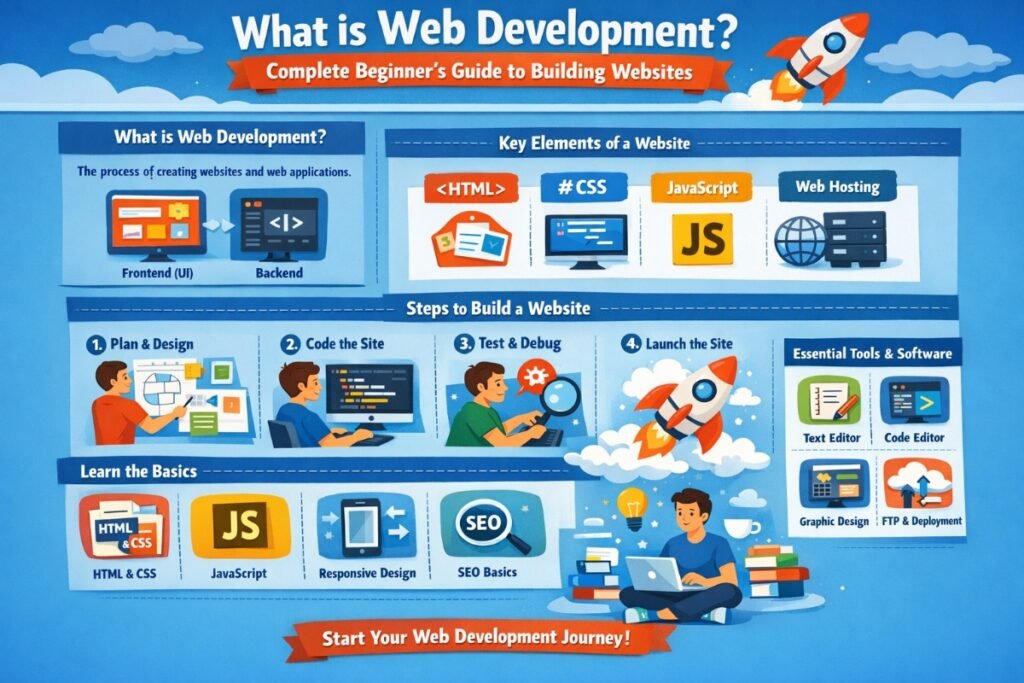

Introduction to Web Development
Websites are an essential part of the modern internet. Businesses, educational platforms, blogs, and online services all rely on websites to deliver information and services to users around the world.
Behind every website is a process called web development. Web development involves building, designing, and maintaining websites and web applications that operate on the internet.
From simple blogs to complex e-commerce platforms, web development powers the digital experiences people use every day. Understanding the basics of web development helps beginners build websites, start online businesses, or pursue careers in technology.
What is Web Development
Web development refers to the process of creating, building, and maintaining websites or web applications.
It includes several technical tasks such as:
- Designing web page structure
- Writing code for websites
- Managing databases
- Maintaining website performance and security
In simple terms, web development is the process that turns ideas and designs into fully functional websites.
Types of Web Development
Web development is usually divided into three main areas depending on the part of the website a developer works on.
Frontend Development
Frontend development focuses on the visible part of a website that users interact with.
- Website layout
- Navigation menus
- Buttons and forms
- User interface elements
The goal of frontend development is to create an attractive and user-friendly experience.
Backend Development
Backend development focuses on the server side of a website. It handles operations that occur behind the scenes.
Backend systems manage:
- Databases
- User authentication
- Application logic
- Server communication
Full Stack Development
Full stack development combines both frontend and backend development. Full stack developers can work on the entire web application, from user interface to server infrastructure.
Frontend Technologies
Frontend development relies on several core technologies that define the structure, appearance, and functionality of websites.
HTML
HTML (HyperText Markup Language) is the basic building block of all websites. It provides the structure of web pages by defining elements such as headings, paragraphs, links, images, and lists.
CSS
CSS (Cascading Style Sheets) controls how a website looks. It manages visual design elements such as colors, fonts, layout, spacing, and responsive design.
JavaScript
JavaScript adds interactivity and dynamic behavior to websites. It allows developers to create features such as interactive forms, animations, dropdown menus, and real-time content updates.
Backend Technologies
Backend technologies power the systems that process user requests and manage data.
Databases
Databases store and organize information used by websites, such as user profiles, products, blog posts, and comments.
Common databases include:
- MySQL
- PostgreSQL
- MongoDB
Server-side Programming
Server-side programming involves writing code that runs on web servers to process requests and manage application logic.
Popular backend programming languages include:
- PHP
- Python
- JavaScript (Node.js)
- Ruby
- Java
APIs
An API (Application Programming Interface) allows different software systems to communicate with each other.
For example, websites may use APIs to integrate payment gateways, weather data, or third-party services.
Web Development Tools
Web developers use many tools to improve productivity and manage development workflows.
- Code editors such as Visual Studio Code
- Version control systems like Git
- Development frameworks such as React, Angular, or Laravel
These tools help developers build applications faster and maintain organized code.
Web Development vs Web Design
Although web development and web design are closely related, they focus on different aspects of creating websites.
Web design focuses on the visual and creative aspects of a website, including layout, typography, colors, and user experience.
Web development focuses on coding and building the technical functionality that makes websites work.
Web Development Process
The process of building a website typically involves several stages.
Planning
Define the purpose, goals, and audience of the website.
Design
Create visual layouts and wireframes that represent the structure of the site.
Development
Developers write code to build the website’s functionality.
Testing
The website is tested to ensure compatibility, performance, and usability.
Deployment
The website is launched and made available online.
Maintenance
Developers continue updating the website to maintain performance and security.
Common Web Development Mistakes
- Ignoring mobile responsiveness
- Poor website performance
- Weak security practices
- Disorganized code structure
- Neglecting user experience
Avoiding these mistakes helps developers create better websites.
Future of Web Development
Web development continues to evolve with new technologies and innovations.
AI-Assisted Development
Artificial intelligence tools are helping developers write code faster and automate tasks.
Modern Frameworks
JavaScript frameworks such as React and Vue enable developers to build powerful web applications.
Performance Optimization
Fast-loading websites are essential for better user experience and search engine rankings.
Beginner Web Development Checklist
- Learn HTML basics
- Practice CSS styling and layout
- Understand JavaScript fundamentals
- Build simple practice projects
- Learn version control using Git
- Explore backend programming basics
- Understand web hosting and domains
Continuous learning and hands-on practice are essential for improving development skills.
Frequently Asked Questions
What skills are required for web development?
Web developers typically learn HTML, CSS, JavaScript, backend programming languages, and problem-solving skills.
How long does it take to learn web development?
Beginners can build simple websites within a few months of consistent learning and practice.
Is web development a good career?
Yes. The demand for web developers continues to grow as businesses expand their online presence.
Do I need a degree to become a web developer?
No. Many developers learn through online courses, tutorials, and practical projects.
Can beginners learn web development without coding experience?
Yes. Many beginner resources teach web development step by step.
Conclusion
Web development is a valuable skill that powers the websites and applications used across the internet. By understanding the basics of frontend and backend technologies, beginners can begin building websites and exploring opportunities in the digital world.
Although learning web development requires time and dedication, consistent practice and curiosity can help anyone develop the skills needed to create modern web experiences.