
Introduction about Keyword Research Tools for SEO
Keyword research remains the foundation of successful SEO. No matter how well you write content or optimize your website, ranking in search engines starts with understanding what people are searching for.
Effective keyword research helps you identify search demand, competition level, and ranking opportunities. It allows marketers and content creators to target queries that drive qualified traffic instead of guessing what users might search for.
Today, modern keyword research tools for SEO go far beyond simple keyword lists. They provide insights into search intent, SERP analysis, competitor keyword gaps, and AI-driven keyword suggestions.
In this guide, we’ll explore the best keyword research tools available in 2026 and how they help marketers and bloggers grow organic traffic.
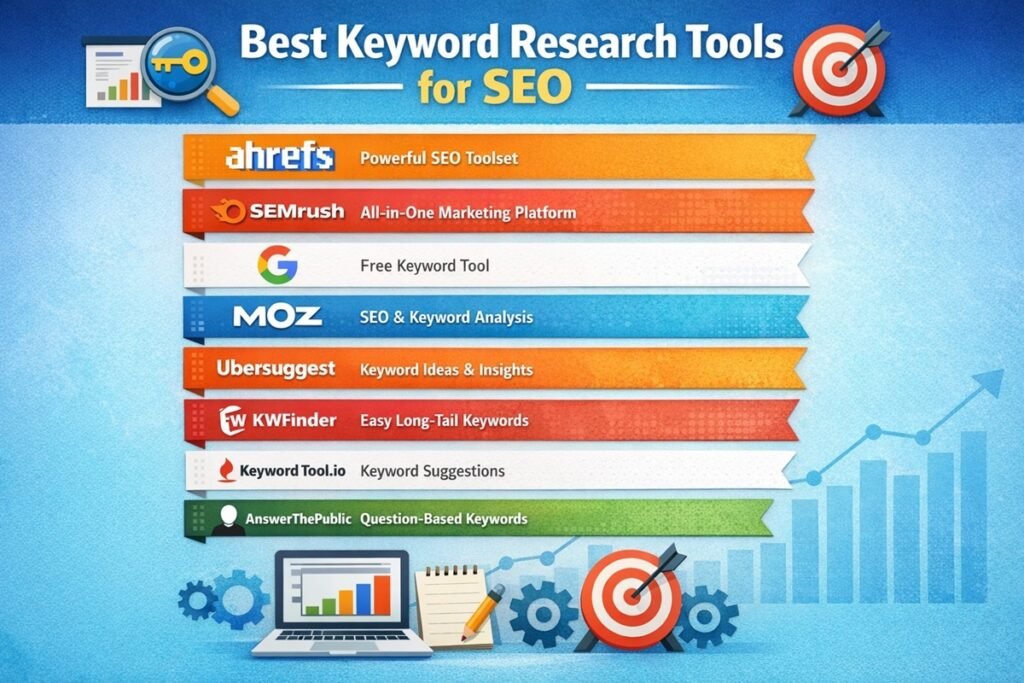
Quick Comparison of the Best Keyword Research Tools
| Tool | Best For | Key Features | Pricing |
|---|---|---|---|
| Ahrefs | Advanced SEO professionals | Keyword database, SERP analysis, competitor research | Paid |
| SEMrush | All-in-one SEO suite | Keyword Magic Tool, keyword difficulty, domain analysis | Paid |
| Google Keyword Planner | PPC and basic SEO research | Search volume, keyword ideas, CPC data | Free |
| Ubersuggest | Beginners and small businesses | Keyword suggestions, SEO difficulty, site audit | Freemium |
| KWFinder | Long-tail keyword research | Keyword difficulty, SERP analysis | Paid |
| Moz Keyword Explorer | Content strategy | Keyword difficulty, opportunity score | Paid |
| SE Ranking | Agencies and freelancers | Keyword tracking, competitor research | Paid |
| AnswerThePublic | Question-based keywords | Search questions and user intent insights | Freemium |
| KeywordTool.io | Autocomplete keyword research | Keyword suggestions from multiple platforms | Freemium |
| AlsoAsked | People Also Ask research | Topic clusters and question mapping | Paid |
| LowFruits | Low-competition keywords | SERP weakness analysis | Paid |
Best Keyword Research Tools for SEO
1. Ahrefs
Overview: Ahrefs is one of the most powerful SEO keyword tools available today. It provides a large keyword database and advanced insights into keyword difficulty and competition.
Key Features:
- Keyword Explorer with large keyword database
- Accurate keyword difficulty metrics
- SERP analysis and ranking insights
- Competitor keyword research
Pros:
- Very large keyword database
- Strong competitor analysis
- Detailed SERP insights
Cons:
- Higher pricing
- Learning curve for beginners
Best For: Advanced SEO research and competitor analysis.
Pricing: Starts around $99/month.
2. SEMrush
Overview: SEMrush is an all-in-one marketing platform that combines keyword research, competitor analysis, and content optimization tools.
Key Features:
- Keyword Magic Tool
- Keyword difficulty scoring
- Competitor keyword gap analysis
- AI-driven content suggestions
Pros:
- Complete SEO toolkit
- Excellent keyword database
- Strong competitor insights
Cons:
- Higher cost for small businesses
- Complex interface initially
Best For: Businesses needing a complete SEO and marketing toolkit.
Pricing: Starts around $129/month.
3. Google Keyword Planner
Overview: Google Keyword Planner is one of the most widely used free keyword research tools for discovering keyword ideas and search volume.
Key Features:
- Search volume estimates
- Keyword suggestions
- CPC and competition data
Pros:
- Free to use
- Data directly from Google
- Simple and reliable
Cons:
- Limited SEO-specific metrics
- Basic keyword suggestions
Best For: Basic keyword discovery and PPC research.
Free vs Paid Keyword Research Tools
Many beginners start with free keyword research tools, but advanced SEO strategies often require paid tools with deeper insights.
When Free Tools Are Enough
- Starting a new blog
- Testing SEO strategies
- Discovering basic keyword ideas
When Paid Tools Are Better
- Analyzing competitors
- Evaluating keyword difficulty
- Managing multiple SEO projects
- Running professional SEO campaigns
How to Choose the Right Keyword Research Tool
Keyword Data Accuracy
Choose tools with large keyword databases for more reliable data.
SERP Analysis Features
SERP insights help determine whether a keyword is realistic to rank for.
Competitor Research
Competitor keyword analysis can reveal valuable content opportunities.
Workflow Integration
The best SEO keyword tools integrate with rank tracking, site audits, and backlink analysis.
Budget
Select tools that match your SEO goals and available budget.
Tips for Effective Keyword Research
- Focus on low-competition keywords
- Understand search intent
- Analyze competitor keywords
- Target long-tail keywords
Conclusion
The right keyword research tool can transform your SEO strategy. By identifying search demand, competition, and user intent, marketers can create content that consistently drives organic traffic.
Whether you choose advanced platforms like Ahrefs and SEMrush or simpler tools like Google Keyword Planner, using the right tools alongside a solid content strategy can significantly improve your search rankings.
FAQs
What are the best keyword research tools?
Some of the best keyword research tools include Ahrefs, SEMrush, KWFinder, Moz Keyword Explorer, and SE Ranking.
Are there free keyword research tools available?
Yes. Google Keyword Planner, Ubersuggest, and AnswerThePublic offer free keyword research features.
Which keyword research tool is best for beginners?
Beginner-friendly tools include Ubersuggest, KWFinder, and Google Keyword Planner.
How do keyword research tools help SEO?
They provide data about search volume, competition, and keyword opportunities for better content optimization.
What is the difference between free and paid keyword research tools?
Free tools offer basic keyword ideas, while paid tools provide deeper insights like keyword difficulty, SERP analysis, and competitor research.