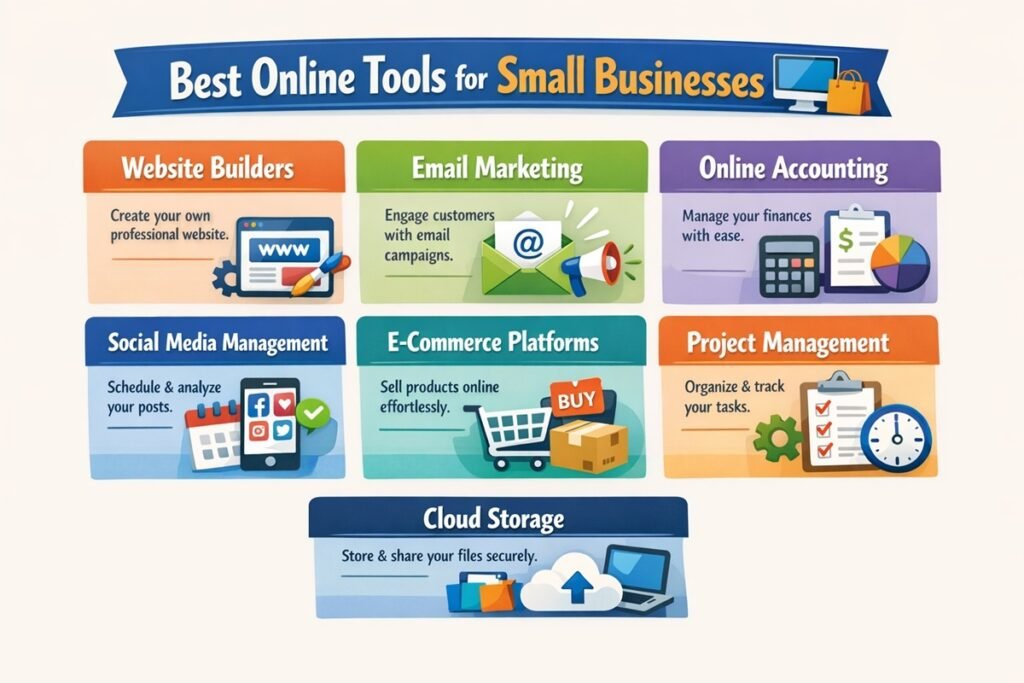

Running a small business means doing more with less. The right digital tools can automate tedious tasks, sharpen your marketing, simplify your finances, and free up your time to focus on growth. This guide breaks down the best online tools every entrepreneur and small business owner should know in 2025.
Key Takeaways
- Digital tools can reduce manual work by up to 30–40% for small teams
- Categories include project management, accounting, marketing, CRM, collaboration, and e-commerce
- Many top tools offer free plans — ideal for bootstrapped startups
- Choosing the right tool depends on your workflow, team size, and budget
- AI-powered automation is now available even in entry-level SaaS plans
- Integration between tools is a critical factor — siloed software wastes time
- The best strategy: start simple, scale your stack as your business grows
Featured Image Idea: Overhead flat-lay of a modern desk with a laptop open to a project dashboard, a notebook, phone showing analytics, and coffee with warm natural light.
Why Small Businesses Need Online Tools
Small businesses operate with limited resources. Unlike large corporations, most small teams cannot afford to hire specialists for every function. A solo founder may need to handle marketing, bookkeeping, client communication, and product delivery all in the same week.
This is exactly where digital tools step in. The right software gives small business owners capabilities that once required entire departments. Today, a single entrepreneur with the right stack of online tools can compete with teams three times their size.
Here is why investing in online tools matters for small businesses:
- Efficiency: Automation handles repetitive tasks like invoicing, email follow-ups, and social media scheduling
- Accuracy: Tools reduce human error in financial reporting and data management
- Customer experience: CRM and communication tools help businesses respond faster and build stronger relationships
- Scalability: Cloud-based tools grow with your business without expensive infrastructure
- Cost savings: SaaS tools often replace the need for full-time hires in specialized roles
- Data insights: Analytics tools provide real-time visibility into marketing, sales, and operations performance
In short, small business productivity tools level the playing field. They allow entrepreneurs to operate with the speed and precision of much larger organizations.
How to Choose the Right Business Tools
With thousands of SaaS tools available, choosing the right software for small business management can feel overwhelming. The key is to evaluate each tool against your specific business needs rather than simply choosing the most popular option.
Here are the five most important factors to consider:
- Cost: Does the pricing fit your budget? Compare monthly vs annual plans
- Ease of use: Prioritize tools with intuitive interfaces
- Scalability: Make sure the software can grow with your business
- Integrations: Ensure the tool connects with software you already use
- Customer support: Good documentation and responsive support are essential
A practical approach is to identify your three biggest daily time-wasters first and then choose tools that eliminate those issues.
Categories of Online Tools Every Small Business Needs
The most effective small business tool stacks cover six core functions: project management, finance, marketing, communication, customer relationships, and online presence.
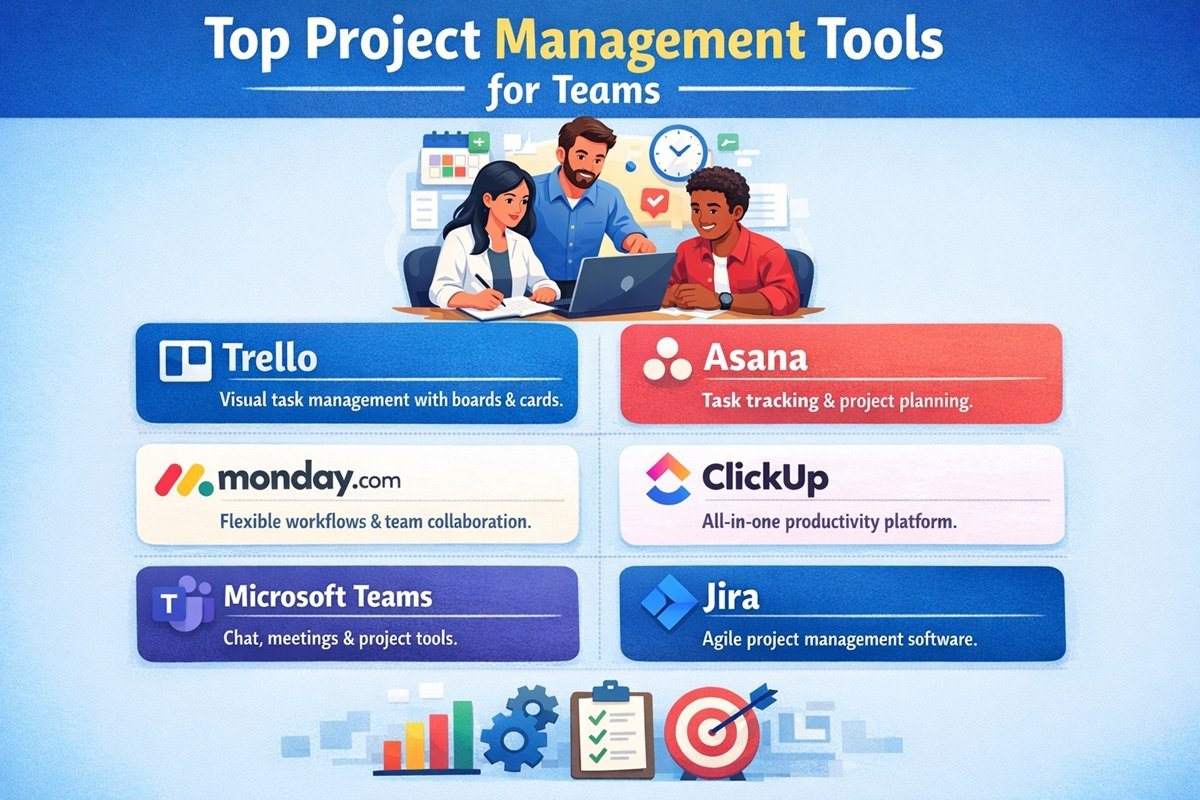
Project Management Tools
Project management software helps teams organize tasks, track deadlines, and manage workloads.
- Trello: Visual drag-and-drop boards ideal for simple workflows and small teams.
- Asana: Structured project management with timelines, task assignments, and automations.
- ClickUp: All-in-one platform combining tasks, documents, time tracking, and goals.
Accounting and Finance Tools
Accounting software helps track cash flow, manage invoices, record expenses, and prepare tax reports.
- QuickBooks: Full accounting system with invoicing, payroll, and reporting.
- FreshBooks: Excellent for freelancers and service-based businesses focused on invoicing.
- Wave: Free accounting platform for basic invoicing and expense tracking.
Marketing and SEO Tools
Marketing tools help businesses attract traffic, nurture leads, and grow their brand online.
- SEMrush: Powerful SEO platform for keyword research, competitor analysis, and site audits.
- Ahrefs: Known for backlink analysis and content research.
- Mailchimp: Popular email marketing platform with automation and campaign analytics.
- Canva: Easy graphic design platform for social media, presentations, and marketing visuals.
Communication and Collaboration Tools
- Slack: Team messaging platform that organizes conversations into channels.
- Zoom: Video conferencing tool used for remote meetings and webinars.
- Google Workspace: Integrated suite including Gmail, Docs, Sheets, Drive, and Meet.
Customer Relationship Management (CRM) Tools
CRM tools help businesses manage leads, customer information, and sales pipelines.
- HubSpot CRM: Free CRM with contact management and basic automation.
- Zoho CRM: Affordable CRM with automation, analytics, and AI features.
- Salesforce: Advanced CRM platform suitable for larger businesses with complex sales processes.
Website and E-commerce Tools
- Shopify: Leading platform for building and managing online stores.
- WordPress: Flexible website platform used by over 40% of websites globally.
- Wix: Beginner-friendly website builder with drag-and-drop features.
Free vs Paid Tools for Small Businesses
| Factor | Free Tools | Paid Tools |
|---|---|---|
| Cost | Zero upfront cost | Monthly or annual subscription |
| Features | Limited functionality | Advanced features available |
| Support | Community or documentation | Priority customer support |
| Scalability | Limited user or feature access | Designed to grow with business needs |
The best strategy for most startups is to begin with free tools and upgrade only when the paid features directly improve efficiency or revenue.
How Online Tools Improve Business Productivity
Automation: Many tools automate repetitive tasks such as sending invoices, scheduling social posts, and tracking customer interactions.
Centralized information: When project details, financial data, and customer records are stored in one place, teams spend less time searching for information.
Workflow consistency: Templates and automated workflows help teams maintain consistent processes.
Practical Tip: Identify the five most time-consuming tasks in your weekly workflow and choose tools specifically designed to automate those tasks.
Common Mistakes When Choosing Business Tools
- Buying too many tools too early
- Paying for features you never use
- Ignoring integrations between software
- Skipping free trials before subscribing
- Failing to train your team properly
- Overlooking security and data privacy
Future Trends in Small Business Tools
- AI-powered automation for marketing, sales, and customer support
- All-in-one platforms combining CRM, marketing, and project management
- No-code tools enabling founders to build workflows without programming
- Real-time collaboration through cloud-native software
- Built-in analytics providing instant insights into business performance
Frequently Asked Questions
What tools do small businesses need most?
Essential tools include project management platforms, accounting software, marketing tools, communication apps, CRM systems, and website management platforms.
What are the best free tools for small businesses?
Popular free tools include HubSpot CRM, Wave accounting, Canva for design, Trello for project management, Mailchimp for email marketing, and Zoom for video meetings.
Which tools help automate small business tasks?
Automation platforms like Zapier connect multiple apps and automate workflows such as lead capture, email sequences, and task creation.
What software helps manage small business finances?
QuickBooks, FreshBooks, and Wave are among the most commonly used accounting tools for small businesses.
What is the best CRM for small businesses?
HubSpot CRM is widely considered the best starting point because it is free and easy to use, while Zoho CRM and Salesforce offer more advanced features.
What is the best e-commerce platform for small businesses?
Shopify is ideal for online stores, WordPress offers flexibility through WooCommerce, and Wix is best for beginners who want a simple website builder.
Conclusion: Build a Tool Stack That Works for You
The best online tools for small businesses are the ones that solve real operational problems and integrate well into your workflow. Start with the essentials, master them, and expand your software stack as your business grows.
Entrepreneurs who use digital tools strategically are better positioned to build efficient, scalable, and profitable businesses. Evaluate each tool based on your workflow, budget, and business goals before making a decision.
©2026 Small Business Digital Review – For educational and informational purposes only.