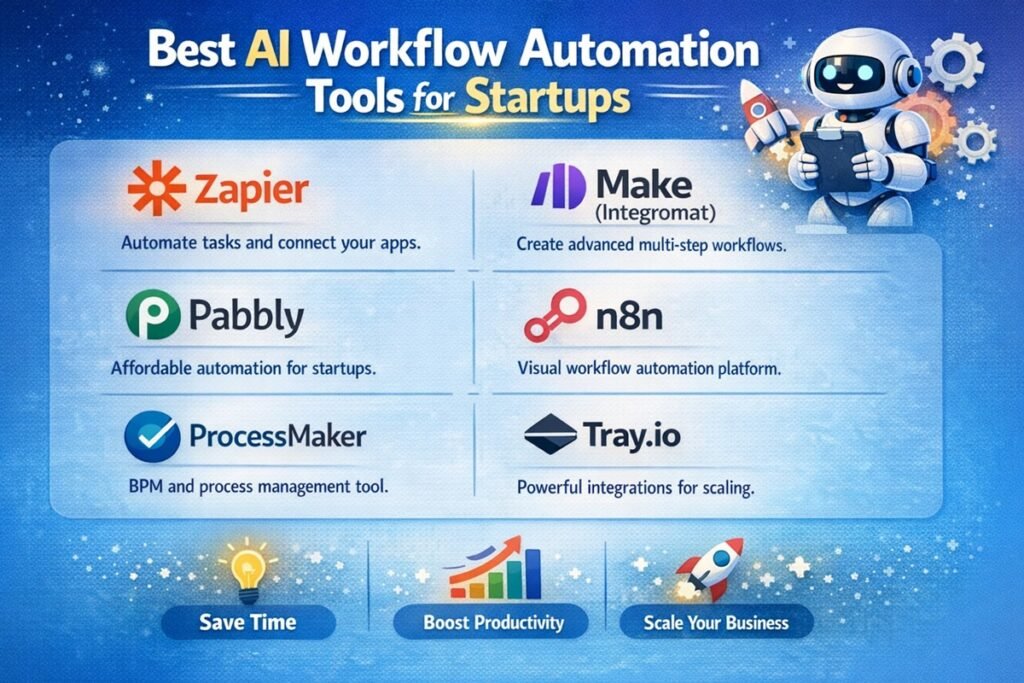

Startups in 2026 are operating in one of the most competitive and fast-moving environments ever. Speed, efficiency, and scalability are no longer optional—they are survival requirements. This is where AI workflow automation tools are making a massive impact.
From automating repetitive tasks to enabling intelligent decision-making, AI-powered automation platforms are helping startups scale faster without increasing operational costs. In this guide, we explore the best AI workflow automation tools for startups in 2026 and how they are transforming modern business operations.
Why Startups Need AI Workflow Automation in 2026
AI automation has become a core part of startup infrastructure. Businesses leveraging AI are seeing significantly higher productivity and faster growth compared to those relying on manual processes. In fact, startups using AI tools can move to market significantly faster while reducing operational costs by up to 30–40%.
For startups with limited resources, automation is not just about saving time—it’s about maximizing output with minimal effort. By implementing AI automation, founders can focus on strategy, innovation, and growth instead of repetitive tasks.
What Makes a Great AI Workflow Automation Tool?
Not all automation tools are created equal. The best AI workflow automation tools for startups share several key characteristics:
- Ease of Use: No-code or low-code interfaces for quick setup
- Scalability: Ability to handle growing workloads
- Integration Ecosystem: Support for multiple apps and platforms
- AI Capabilities: Predictive analytics and decision-making
- Cost Efficiency: Affordable pricing for early-stage businesses
Choosing the right tool depends on your startup’s specific needs, including marketing, sales, operations, and customer support.
1. Zapier: Best for Simplicity and Integrations
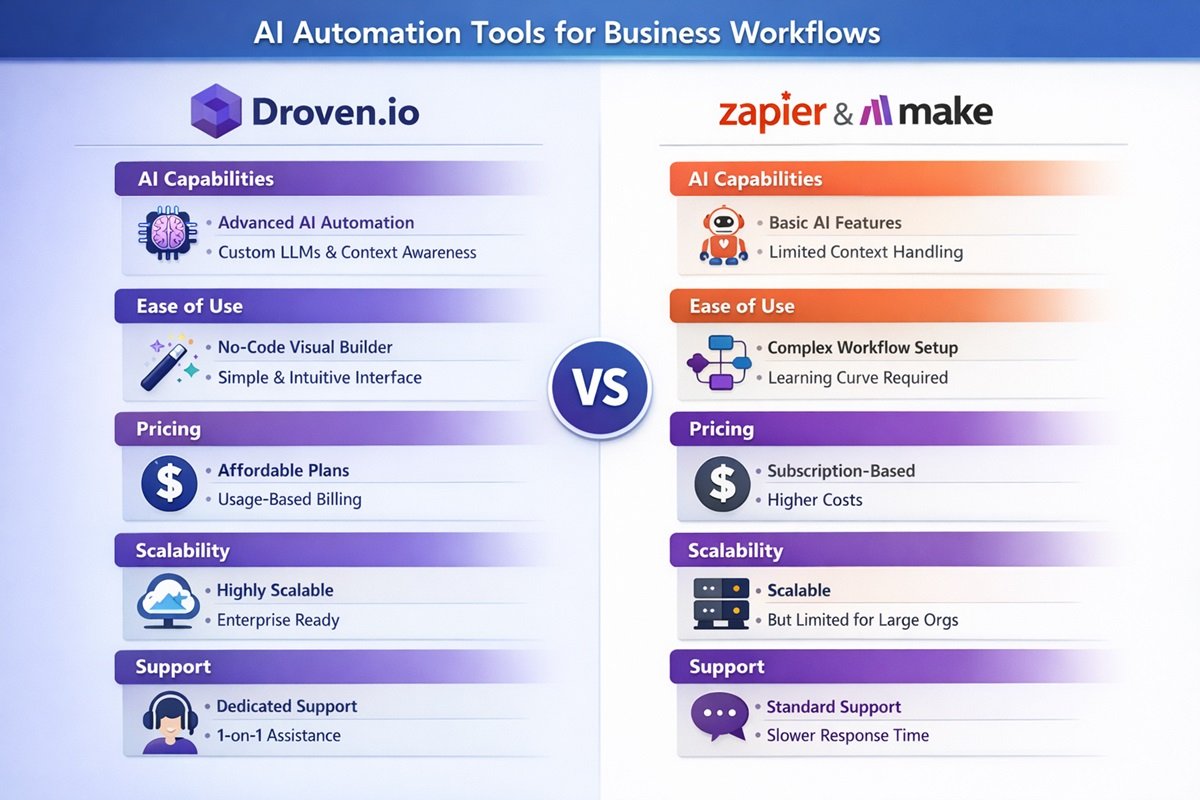
Zapier continues to dominate the automation space in 2026, especially for startups looking for a simple and reliable solution. It connects with thousands of apps, making it one of the most versatile tools available.
Zapier allows users to create automated workflows called “Zaps” that trigger actions across different applications. Its ease of use makes it ideal for non-technical founders and small teams.
With support for over 8,000 app integrations, Zapier eliminates the need for coding while enabling powerful automation across tools.
Key Use Cases:
- Lead capture and CRM updates
- Email automation
- Task management automation
2. Make (Integromat): Best for Advanced Workflow Automation
Make AI is a powerful automation platform designed for users who need more control over their workflows. It offers a visual builder that allows startups to create complex automation scenarios with conditional logic.
Unlike simpler tools, Make AI excels at handling data-heavy processes and multi-step workflows. This makes it ideal for startups with more advanced operational requirements.
Its flexibility allows users to design workflows that adapt to real-time data, making it a strong choice for scaling businesses.
Key Use Cases:
- Data processing and enrichment
- Advanced workflow automation
- API integrations
3. Droven.io AI Automation Tools: Best for AI-Driven Workflows
Droven.io AI automation tools are emerging as a next-generation solution for startups that want to go beyond traditional automation. These tools combine workflow automation with AI agents, enabling intelligent decision-making within workflows.
Droven.io allows startups to build automation systems that not only execute tasks but also analyze data and make decisions. This makes it particularly valuable for scaling operations without increasing complexity.
Its no-code approach ensures accessibility, while its AI capabilities provide a competitive advantage in a crowded market.
Key Use Cases:
- Intelligent workflow automation
- AI-driven decision systems
- End-to-end business process automation
4. Airtable Automations: Best for Data-Centric Startups
Airtable combines the simplicity of spreadsheets with the power of databases, making it a popular choice for startups. Its automation features allow teams to trigger workflows based on data changes.
This tool is particularly useful for managing projects, tracking leads, and organizing operations. While not as advanced as some AI-first platforms, it offers a strong foundation for workflow automation.
5. Microsoft Power Automate: Best for Enterprise-Ready Startups
Microsoft Power Automate is a robust platform that integrates seamlessly with Microsoft products. It offers AI-powered automation features that help startups streamline workflows and improve productivity.
This tool is ideal for startups already using Microsoft ecosystems, providing seamless integration and scalability.
6. n8n: Best for Custom and Self-Hosted Automation
n8n is an open-source automation platform that offers flexibility and control. It allows startups to build custom workflows and even self-host their automation systems.
With AI workflow builder capabilities, users can create workflows using natural language prompts, making it easier to automate complex processes.
How AI Automation Transforms Startup Operations
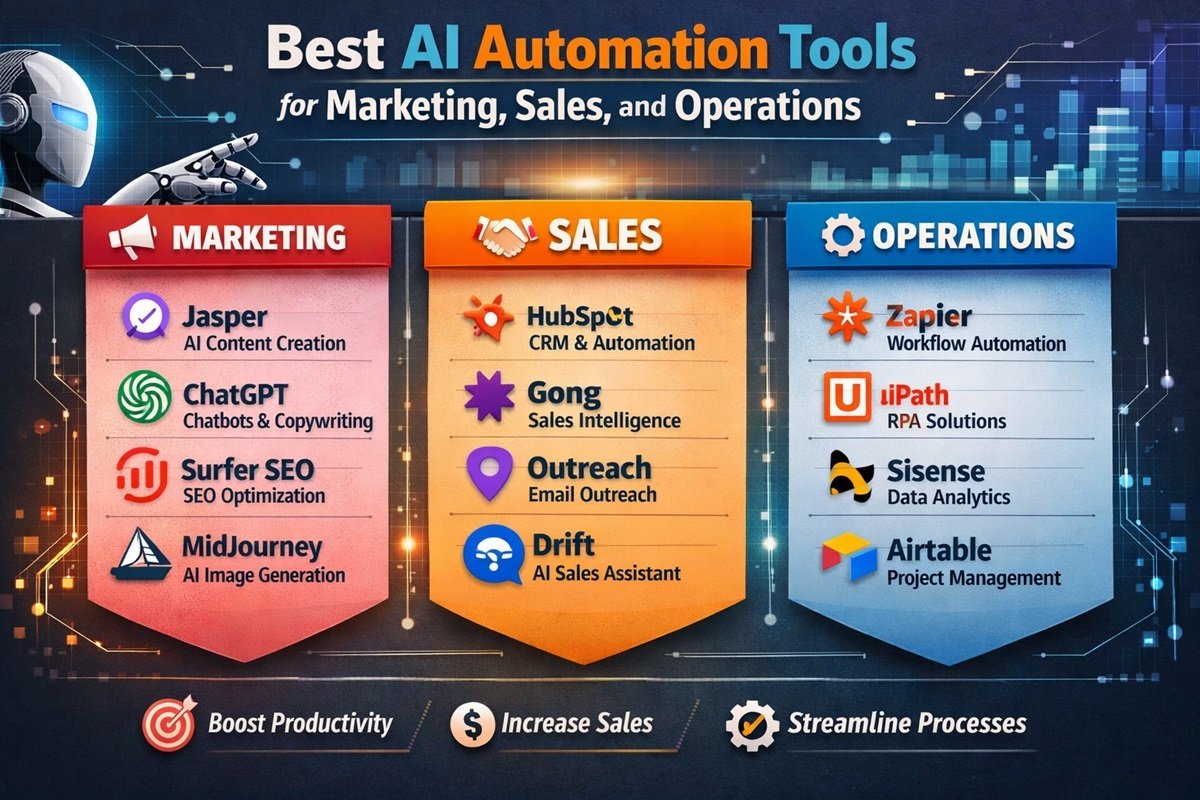
AI automation is impacting every aspect of startup operations, from marketing to sales and beyond.
Marketing Automation Tools
Marketing automation tools enable startups to automate campaigns, personalize content, and analyze customer behavior. AI-driven tools can predict user intent and optimize campaigns in real time, leading to higher engagement and conversions.
Sales Automation
Sales automation helps startups streamline lead management, track customer interactions, and close deals faster. AI-powered systems can analyze data to recommend the best actions, improving sales efficiency and revenue growth.
Workflow Automation Across Teams
Workflow automation connects different departments, ensuring seamless communication and collaboration. By automating processes such as approvals, reporting, and data transfers, startups can operate more efficiently and reduce errors.
Key Benefits of AI Workflow Automation for Startups
- Increased Productivity: Automates repetitive tasks and frees up time
- Cost Savings: Reduces operational expenses
- Scalability: Supports business growth without additional resources
- Improved Accuracy: Minimizes human errors
- Faster Decision-Making: AI-driven insights enable quick actions
AI-driven workflow automation also improves efficiency in areas like supply chain management, inventory planning, and order fulfillment, helping businesses operate more effectively.
How to Choose the Right AI Automation Tool for Your Startup
Choosing the right tool depends on your startup’s specific needs. Here are a few tips:
- Start with your biggest bottlenecks
- Choose tools that integrate with your existing stack
- Consider scalability and future growth
- Evaluate pricing and ROI
Startups should focus on building a connected ecosystem where tools work together rather than operating in isolation. This ensures maximum efficiency and impact.
Future of AI Workflow Automation for Startups
The future of AI workflow automation lies in intelligent systems that can operate autonomously. Multi-agent AI systems, predictive analytics, and real-time decision-making will become standard features in automation platforms.
As technology evolves, startups that adopt AI automation early will have a significant advantage over competitors. The ability to automate complex processes and make data-driven decisions will be a key driver of success in 2026 and beyond.
Conclusion
AI workflow automation tools are no longer optional for startups—they are essential for growth and survival. Platforms like Zapier, Make AI, and Droven.io AI automation tools offer powerful solutions for automating business processes and improving efficiency.
By leveraging AI automation, startups can scale faster, reduce costs, and focus on innovation. The key is to choose the right tools that align with your business goals and integrate seamlessly into your workflow.
Published by DigitalExpressHub: This article on “Best AI Workflow Automation Tools for Startups (2026 Edition)” is brought to you by DigitalExpressHub. For more insights and related posts, feel free to contact us.