
Search engines have become the primary way people discover information on the internet. Whether someone is looking for a product, a tutorial, or a local service, they usually begin with a search engine like Google.
For website owners, bloggers, and businesses, appearing in those search results can make a huge difference. This is where Search Engine Optimization (SEO) comes in.
SEO is the process of improving a website so that search engines can understand it better and rank it higher in search results. When done correctly, SEO helps bring consistent, organic traffic to your website without paying for ads.
In this beginner’s guide, you will learn what SEO is, how search engines work, and the essential strategies that help websites rank higher in search results.
What is SEO
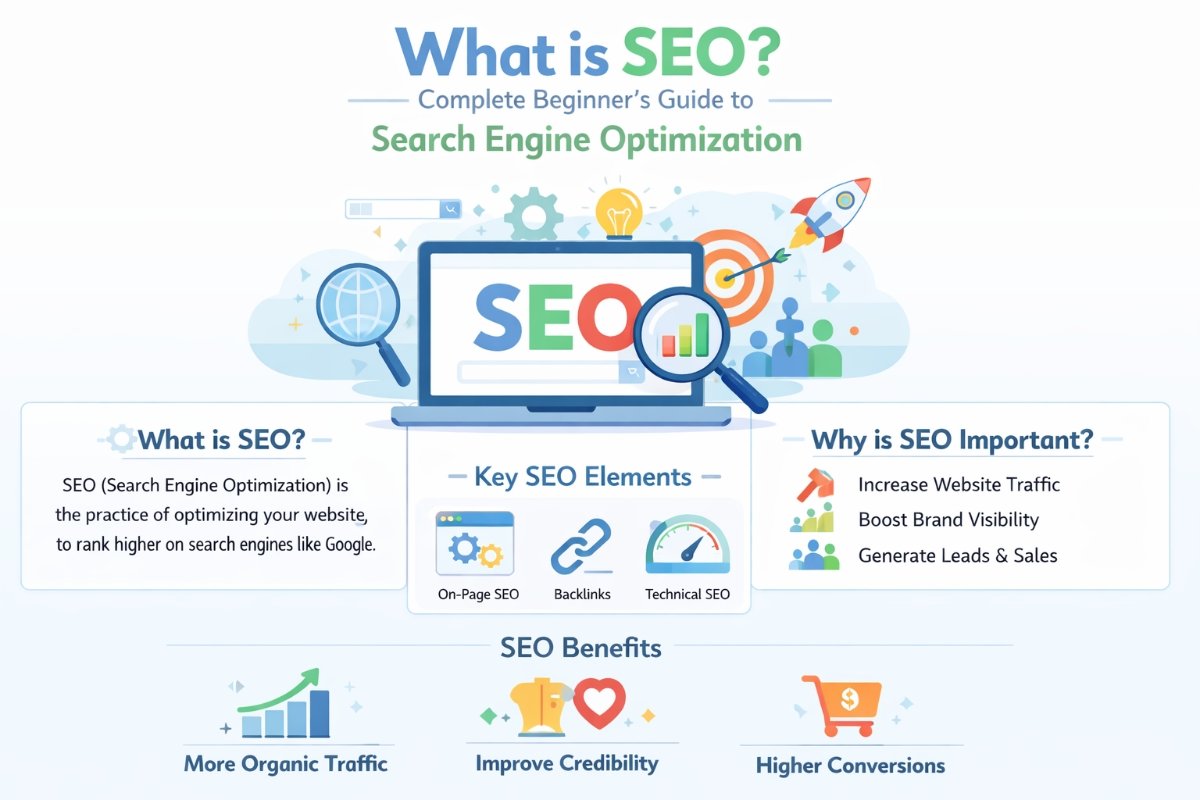
Search Engine Optimization (SEO) is the practice of improving a website’s visibility in search engine results pages.
The goal of SEO is simple: help search engines understand your content and show it to people searching for related information.
For example, if someone searches for best WordPress SEO plugins, search engines analyze millions of pages and show the most relevant results. Websites with strong SEO signals are more likely to appear on the first page.
- Creating useful content
- Optimizing website structure
- Improving page speed
- Earning backlinks
Why SEO is Important
Organic Traffic
SEO helps websites attract free traffic from search engines without paying for advertisements.
Credibility and Trust
Websites that appear on the first page of search results are often perceived as more trustworthy.
Long-Term Results
Unlike paid ads, SEO results can last for years if the content remains relevant and well optimized.
Better User Experience
SEO practices improve website speed, structure, and usability.
Competitive Advantage
Businesses investing in SEO often outperform competitors relying only on paid marketing.
How Search Engines Work
Crawling
Search engines use automated bots called crawlers to discover web pages across the internet.
Indexing
After crawling, the search engine stores information about those pages in its index.
Ranking
When users perform a search, the engine ranks pages based on relevance, authority, and quality.
Types of SEO
On-Page SEO
On-page SEO refers to optimizations made directly on website pages.
- Content optimization
- Keyword usage
- Title tags
- Meta descriptions
- Internal linking
Technical SEO
Technical SEO improves the technical structure of a website so search engines can crawl and index it effectively.
- Website speed
- Mobile optimization
- HTTPS security
- XML sitemaps
Off-Page SEO
Off-page SEO involves activities outside your website that help build authority.
The most important factor is backlinks from reputable websites.
Keyword Research Basics
Keywords are the words and phrases people type into search engines when looking for information.
Short-tail Keywords
Example: SEO tools
Long-tail Keywords
Example: best SEO tools for beginners
Long-tail keywords are usually easier to rank for and attract targeted traffic.
On-Page SEO Basics
Title Tags
The title tag is the headline that appears in search engine results.
Example: What is SEO? Complete Beginner’s Guide (2026)
Meta Description
Meta descriptions summarize page content and encourage users to click.
Headings
Headings help organize content into clear sections.
Internal Linking
Internal links connect pages within your website and help search engines understand relationships between topics.
Content Quality
High-quality content should provide clear answers, useful insights, and easy readability.
Technical SEO Basics
Website Speed
Fast websites provide better user experience and improved search rankings.
Mobile Friendliness
Most users browse on mobile devices, so mobile optimization is essential.
Site Structure
A clear structure helps search engines understand the hierarchy of your website.
- Home
- SEO
- Digital Marketing
- WordPress
- Cloud Computing
Crawlability
Ensure search engines can access your pages through proper site architecture and internal links.
Off-Page SEO Basics
Backlinks
Backlinks from trusted websites signal credibility and authority.
Brand Mentions
Mentions of your brand across the web contribute to reputation signals.
Guest Posting
Publishing articles on reputable websites can help build backlinks and increase exposure.
Common SEO Mistakes Beginners Make
- Keyword stuffing
- Duplicate content
- Ignoring technical SEO
- Poor site structure
- Slow website speed
SEO Tools Beginners Can Use
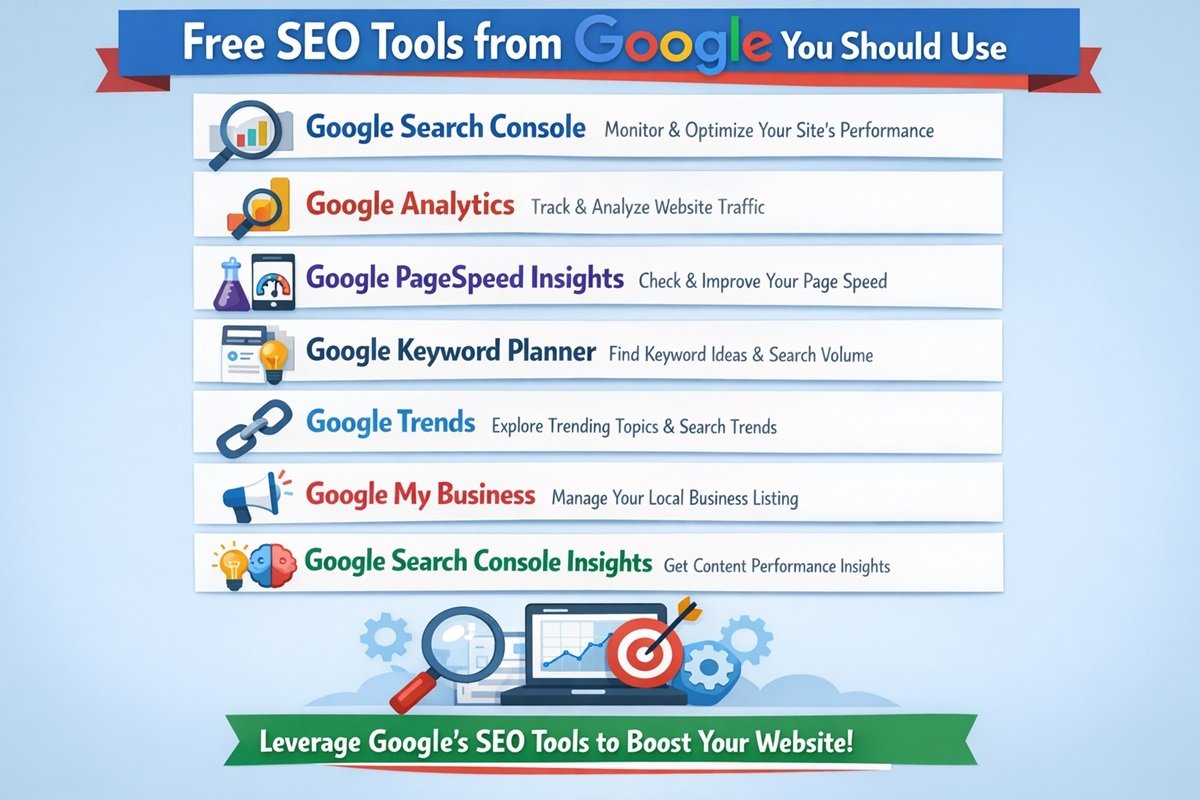
- Google Search Console
- Google Analytics
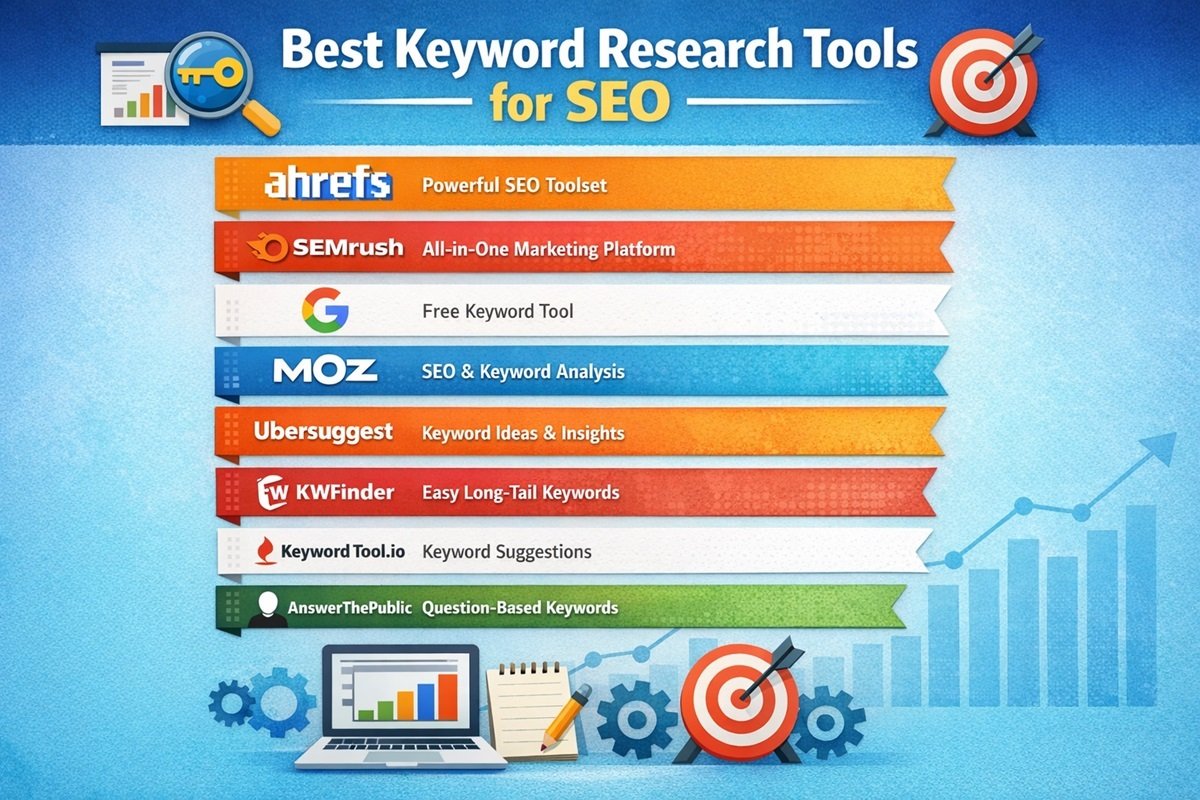
- Keyword research tools
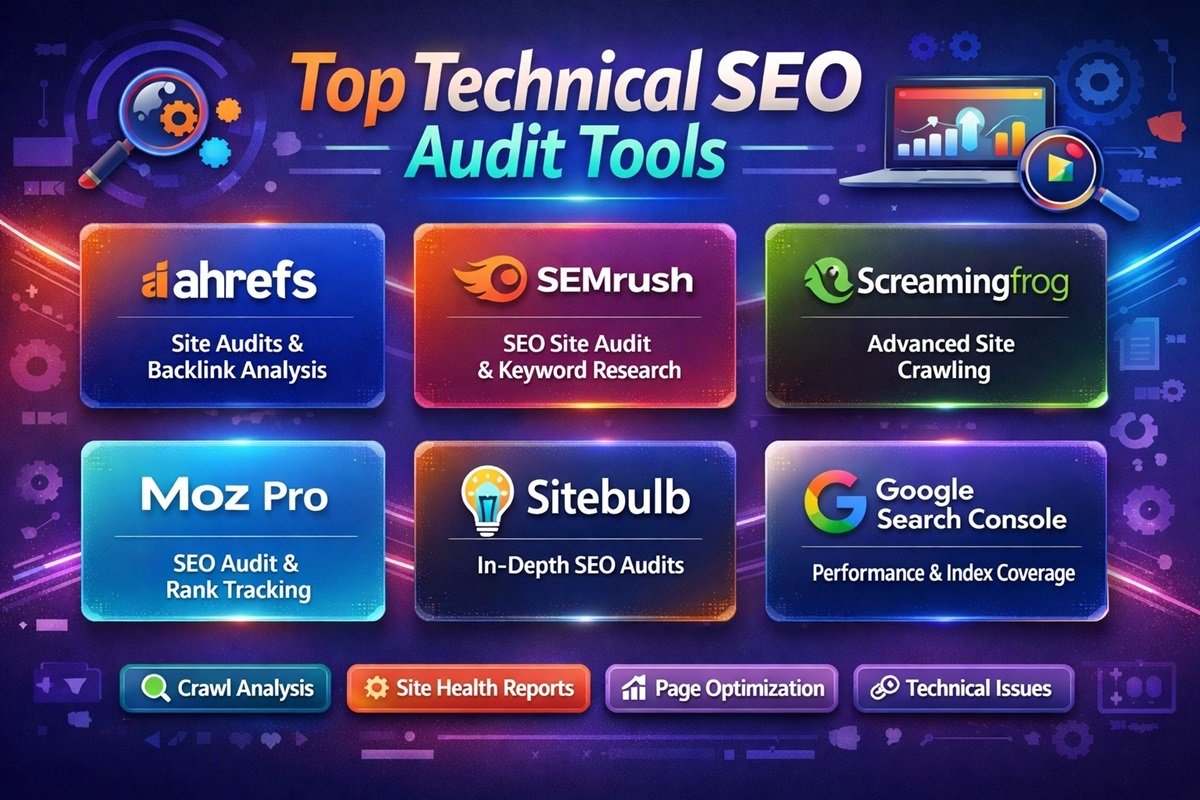
- SEO audit tools
Future of SEO in 2026
AI Search
Artificial intelligence is improving search results and personalization.
Semantic Search
Search engines now understand the meaning behind queries rather than just matching keywords.
User Intent
Understanding what users actually want when they search is critical.
Content Quality
Helpful, informative content remains the most reliable way to rank.
Beginner SEO Checklist
- Choose a clear topic and keyword
- Create helpful content
- Optimize title tags and headings
- Add internal links
- Ensure mobile friendliness
- Improve website speed
- Submit site to Google Search Console
- Build quality backlinks
- Update content regularly
Conclusion
Search Engine Optimization is one of the most valuable skills for anyone working online. Whether you run a blog, manage a business website, or work in digital marketing, SEO can help you attract consistent traffic and build long-term online presence.
SEO focuses on creating useful content, improving website structure, and providing the best possible experience for users.
By understanding the fundamentals and applying them consistently, beginners can gradually build websites that perform well in search results.
Frequently Asked Questions
What is SEO (Search Engine Optimization)?
SEO is the process of improving a website’s visibility in search engine results to attract more relevant organic traffic. It involves optimizing website content, keywords, technical performance, and backlinks to help search engines understand and rank pages.
How does SEO work?
SEO works by helping search engines discover, crawl, index, and rank website pages. Search engines evaluate factors such as content relevance, website usability, page experience, and links to determine which pages best answer a user's search query.
What are the main types of SEO?
The main types of SEO are on-page SEO, off-page SEO, and technical SEO. On-page SEO focuses on content and keywords, off-page SEO involves building authority through backlinks and other external signals, and technical SEO improves website crawling, indexing, speed, and overall performance.
How long does SEO take to show results?
SEO typically takes around three to six months to show noticeable results, although some websites may see improvements sooner or need more time. Results depend on competition, website authority, content quality, technical issues, and the consistency of SEO efforts.
Can beginners learn SEO without technical knowledge?
Yes, beginners can learn SEO without advanced technical knowledge. Starting with keyword research, creating helpful content, optimizing page titles and meta descriptions, improving internal links, and using tools such as Google Search Console can help build a strong SEO foundation. Technical knowledge becomes more useful as websites grow and optimization needs become more complex.